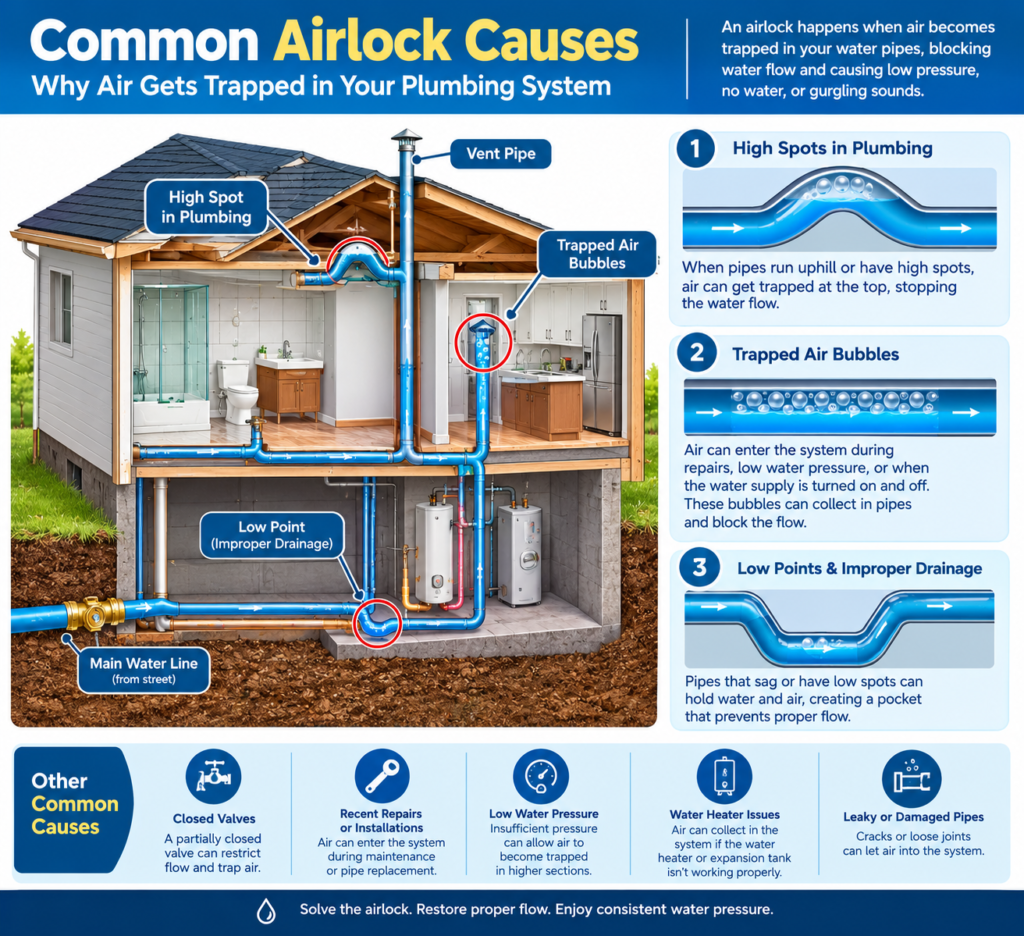
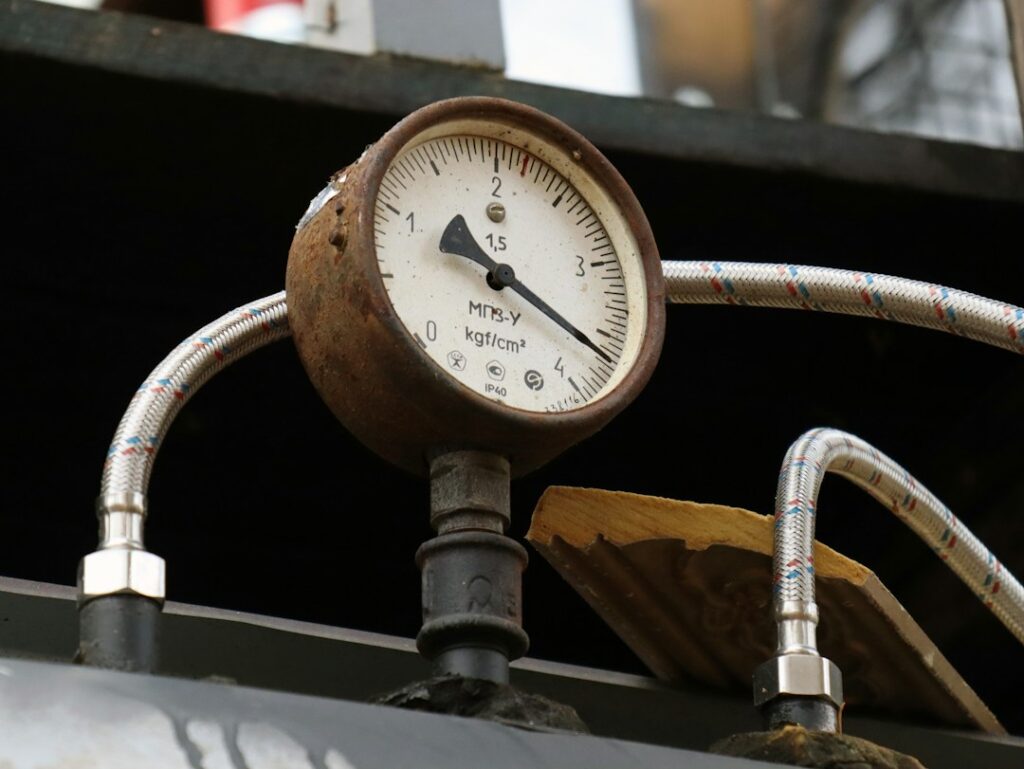
Water that suddenly blasts from a faucet, recurring drips, or pressure that changes during the day can make homeowners wonder whether the house has too much water pressure. Guessing from the feel of a shower is unreliable. A simple pressure gauge connected to an outdoor hose faucet can give you a useful starting measurement.
This guide explains how to check household water pressure, understand the reading, and recognize when a pressure-reducing valve (PRV) or professional inspection may be needed. The steps are for observation only: do not dismantle or adjust plumbing equipment you are not qualified to service.
Why home water pressure matters
Water pressure is measured in pounds per square inch (psi). If pressure is consistently higher than the range recommended by your water utility, it can place extra stress on faucets, toilet fill valves, appliance supply hoses, and pipe connections. High pressure can contribute to leaks and wasted water, although a leak can have many other causes too.
One weak faucet does not automatically mean the whole house has low pressure. A clogged aerator, partly closed fixture valve, or local restriction may affect only that outlet. If one tap has poor flow, see our guide to cleaning a faucet aerator before assuming the main supply pressure is the problem.
What is a reasonable water-pressure reading?
There is no single target that applies to every U.S. home. As one example, Highlands Ranch Water recommends 40–70 psi for homes in its service area and advises customers that readings above 70 psi should be reduced. Your own water utility, equipment manufacturers, and locally adopted plumbing code may give different guidance.
The 2021 International Plumbing Code, Section 604.8, says that where static pressure inside a building exceeds 80 psi, an approved pressure-reducing valve must reduce the building distribution pressure to no more than 80 psi. That provision applies where the jurisdiction has adopted it; local code editions and amendments vary. Do not treat 80 psi as an ideal target or assume the same rule applies unchanged in every town.
Signs your home’s pressure may be too high
- Several fixtures seem unusually forceful at the same time, not just one faucet.
- Faucets, toilet fill valves, or appliance connections develop repeated drips or leaks.
- Pressure seems to surge or change noticeably between morning and late evening.
- A pressure gauge records a peak that is much higher than its initial reading.
- You hear banging pipes. This can be water hammer or another plumbing issue, so noise alone does not prove high static pressure.
If you find damp cabinets, ceilings, or walls, treat the moisture as a separate issue and investigate promptly. Our guide to finding hidden water leaks explains other warning signs to look for.
Tools for a basic pressure check
- A hose-thread water-pressure gauge that matches your outdoor faucet. A model with a peak-hold needle is useful for spotting short-lived pressure spikes.
- A towel to catch residual water when removing a garden hose.
- A notepad or phone to record the readings, time, and any unusual pressure changes.
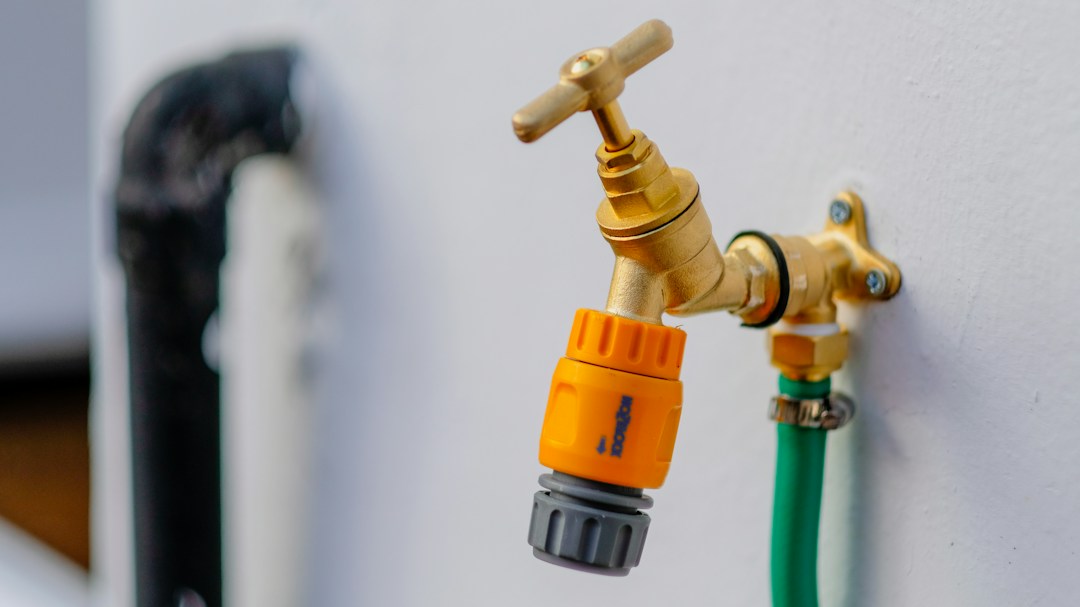
Photo: Harry Grout on Unsplash.
How to test home water pressure in five steps
1. Choose a suitable hose faucet
For a home connected to municipal water, use an accessible outdoor hose faucet close to where the service line enters the house, if possible. Remove any garden hose or splitter. Do not use a faucet that is damaged, badly corroded, leaking, or difficult to operate. If you are on a private well, pressure can vary as the pump cycles; use an accessible test point near the pressure tank only if your well-system instructions allow it, or ask a well contractor to check the system.
2. Stop other water use
Turn off faucets and showers, pause the dishwasher and washing machine, and make sure irrigation is not running. Water being used elsewhere can lower the reading while you test. The goal is to measure static pressure with no water flowing through the home’s fixtures.
3. Attach the gauge
Thread the gauge onto the hose faucet by hand, making sure its washer is seated. Follow the gauge maker’s instructions and avoid overtightening the connection. If the faucet or gauge connection leaks, stop the test rather than forcing it with tools; a damaged faucet should be repaired first.
4. Open the faucet and read the gauge
Open the hose faucet fully and read the gauge. If your gauge has a peak-hold needle, leave it connected for several minutes so it can register a higher pressure event. Whirlpool Water Solutions recommends testing with household water use stopped and repeating the check at different times, because municipal supply pressure can change as neighborhood demand changes.
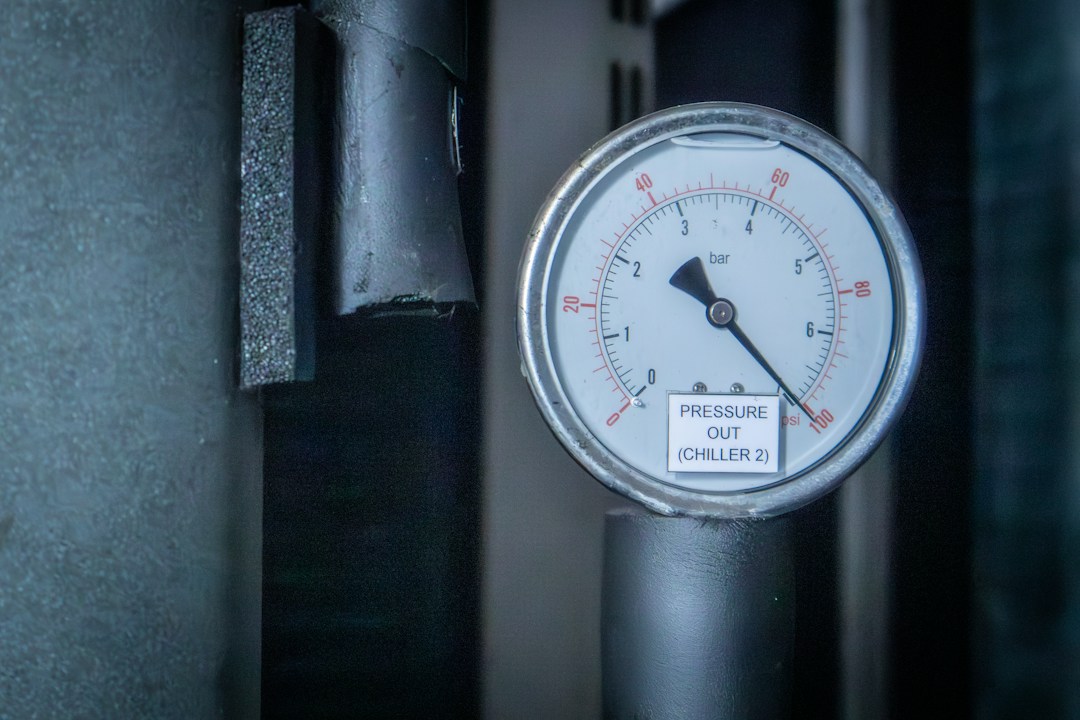
Photo: Malcolm Choong on Unsplash.
5. Record and repeat the result
Write down the reading and the time. Repeat at another time of day, especially if you suspect pressure rises overnight or when neighborhood water use is low. A peak-hold gauge can reveal a brief spike that a single glance would miss. If you do not have an outdoor hose faucet, a washing-machine cold-water connection may be an alternative, but the valve must be shut off before disconnecting the hose and residual water should be expected. Follow the gauge manufacturer’s instructions or have a plumber perform the test.
How to interpret the reading
- Below 40 psi: This may feel weak in some homes, but first check whether the problem is limited to one fixture. Partly closed shutoff valves, clogged aerators, filters, or a supply-side issue can reduce flow. Contact your water utility or a plumber if the low reading affects the whole home.
- About 40–70 psi: This falls within the range recommended by some utilities, including Highlands Ranch Water. Confirm the range recommended where you live and for your appliances.
- Above 70 psi: Check your local utility’s guidance and arrange a professional assessment if the reading is persistent. Some utilities recommend reducing pressure above this point to protect household equipment.
- Above 80 psi: Treat this as a prompt to contact a licensed plumber. The 2021 International Plumbing Code calls for an approved PRV when static building pressure exceeds 80 psi in places that have adopted that provision.
What does a pressure-reducing valve do?
A pressure-reducing valve, often called a PRV or pressure regulator, lowers incoming supply pressure before water reaches the home’s distribution piping. It is commonly installed near the water meter or main service entry, but the location varies by house. The valve may look like a brass, bell-shaped fitting installed in the main water line.
If you already have a PRV, sudden high or low readings, or pressure that repeatedly surges, can indicate that it needs inspection. Do not turn its adjustment screw, remove its cover, or take it apart based only on an online guide. Incorrect adjustment can leave the system outside the recommended range. A plumber can test the valve, check its condition, and determine whether repair or replacement is appropriate.
Can a water heater cause pressure spikes?
It can be one factor. Water expands as it is heated, and some plumbing systems need a properly designed thermal-expansion control arrangement. A peak-pressure gauge can help show whether pressure rises after the water heater reheats, but it cannot diagnose the cause by itself. Ask a plumber to inspect the PRV, any thermal expansion tank, and the system’s check valves if readings climb after a heating cycle. Never cap, block, or tamper with a water heater’s temperature-and-pressure relief discharge pipe.
When to call a plumber
- Your static reading is consistently above the range recommended by your water utility, especially if it is above 80 psi.
- Pressure swings sharply, or a peak-hold gauge records unexplained spikes.
- You see repeated leaks, damaged supply lines, or water around the meter or PRV.
- The regulator is corroded, leaking, inaccessible, or appears to be malfunctioning.
- You rely on a private well and pressure changes as the pump starts and stops.
If a leak is active, use your home’s main shut-off valve if it is safe and accessible. Keep the location handy by following our main water shut-off valve guide. If water is near electrical equipment, stay clear and get appropriate emergency help.
Frequently asked questions
Do I need to shut off the main water supply to test pressure?
No. For a basic test at an outdoor hose faucet, leave the main supply on, stop other water use, and follow the gauge instructions. Do not attempt the test on a damaged or leaking faucet.
Can I test pressure while a shower or faucet is running?
You can observe pressure under flow for a different diagnostic purpose, but it is not the static-pressure test described here. Stop other water use when checking static pressure so the reading is not lowered by another fixture.
Can I adjust the pressure regulator myself?
It is safer to have a plumber assess and adjust the PRV. The correct setting depends on the home’s plumbing, equipment, and local requirements, and a faulty valve may need service rather than adjustment.
Conclusion
A hose-bib pressure gauge is a straightforward way to check whether your home’s water pressure deserves attention. Measure with other water use stopped, record more than one reading, and compare the results with your local utility’s guidance and applicable plumbing code. If pressure is persistently high, fluctuates sharply, or is accompanied by leaks, have a licensed plumber inspect the PRV and the rest of the system instead of trying to adjust it yourself.
Sources and further reading
- Highlands Ranch Water: Water Pressure — residential pressure guidance and homeowner testing instructions.
- 2021 International Plumbing Code, Section 604.8 — pressure-reducing valve requirement where adopted.
- Whirlpool Water Solutions: How to Test Incoming Water Pressure — gauge placement, stopping water use, and repeat readings; updated January 29, 2026.
- Zurn Wilkins HGI-25 Hose Bibb Pressure Gauge — gauge features for tracking peak pressure, including pressure changes associated with thermal expansion.