
Nothing ruins a relaxing shower like water that sputters, stalls, and spits instead of flowing. If this sounds familiar, you’re dealing with a common household headache: an airlock. Homeowners run into this issue constantly, and while it can be annoying, it’s usually easy to fix once you understand what’s happening inside your pipes.
- What Exactly Is an Airlock?
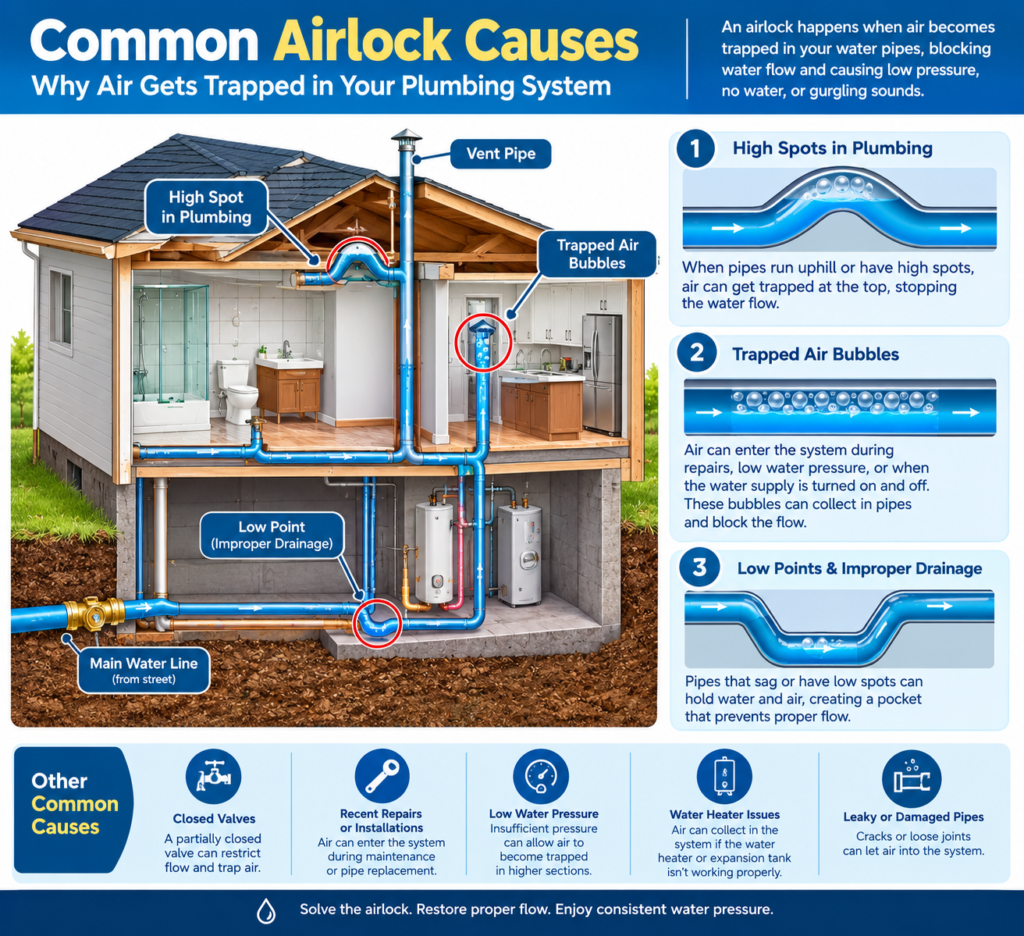
- What Causes Airlocks to Form
- How to Tell You've Got an Airlock
- Tools You'll Need Before You Start
- Step-by-Step: The Basic Fix
- Using Water Pressure for Stubborn Airlocks
- Preventing Airlocks From Coming Back
- When It's Time to Call a Plumber
- Keeping Your Plumbing Healthy Long-Term
- Frequently Asked Questions
What Exactly Is an Airlock?
An airlock forms when a pocket of trapped air gets stuck inside your plumbing, blocking the water behind it. Think of it like a cork in a bottle — the air pocket sits in a high point of the pipe and simply won’t let water pass. This is especially common in pipe sections that rise and dip, since air naturally collects at the highest point it can reach.
The result is water that flows unevenly, weakly, or not at all from a particular fixture. A shower might slow to a trickle, a faucet might sputter, or an appliance like your dishwasher might not fill properly. In places where water conservation matters, an airlock is doubly frustrating — you may end up running the tap longer than necessary just to get consistent pressure, which can nudge your water bill up.
The good news: once you know the warning signs, you can usually diagnose and fix an airlock yourself, without waiting for it to become a bigger plumbing problem.
What Causes Airlocks to Form
Airlocks don’t appear out of nowhere. A few common triggers include:
- Small leaks or loose fittings. Any point where a pipe joint isn’t fully sealed can let outside air seep into the system.
- Recent plumbing work. Installing a new fixture, replacing a section of pipe, or fixing a leak can all introduce air into lines that were previously airtight.
- Heavy, sudden water demand. Hosting a big gathering or running several fixtures at once can shift water pressure enough to pull air into the system.
- Interruptions in your water supply. Scheduled maintenance, drought restrictions, or a temporary shutoff can all allow air to enter pipes once service resumes.
- Poor pipe installation. Pipes that weren’t sloped or connected correctly are more prone to trapping air in the first place.
Knowing which of these applies to your home makes it much easier to target the actual problem instead of guessing.
How to Tell You’ve Got an Airlock
A few telltale signs point straight to an airlock:
- Inconsistent pressure. Water that surges, weakens, or cuts out entirely without warning.
- Strange noises. Banging, clunking, or gurgling sounds — often called “water hammer” — happen when trapped air shifts around inside the pipe.
- Sputtering faucets. Air escaping in short bursts as you try to run water is a classic symptom.
- Sudden flow changes with no obvious cause. If nothing else has changed in your home but your water flow has, an airlock is a likely culprit.
Catching these signs early means you can deal with a minor annoyance before it turns into a bigger plumbing issue.
Tools You’ll Need Before You Start
Gather these basics before attempting a fix:
- A standard garden hose
- An adjustable wrench (for loosening fittings if needed)
- A bucket or basin to catch water
- Old towels or rags for cleanup
- A flashlight for checking dim or tight spaces
Having everything within reach before you begin makes the whole process faster and far less messy.
Step-by-Step: The Basic Fix
- Find the affected faucet. This is the one giving you trouble — weak flow, sputtering, or no water at all.
- Attach a garden hose to it, making sure the connection is tight and secure.
- Run water backward through the line. Turn on the faucet and let water flow into the pipe from the hose. This reverse pressure often pushes the trapped air pocket out.
- Catch the overflow. Keep your bucket handy to manage any water that escapes during the process.
- Repeat if needed. It may take a couple of tries before flow returns to normal — that’s completely normal.
This simple method resolves most minor airlocks without needing any special equipment or professional help.
Using Water Pressure for Stubborn Airlocks
If the basic method doesn’t do the trick, try using stronger water pressure to force the air out:
- Connect your garden hose to an outdoor faucet instead.
- Open every faucet in the house so trapped air has somewhere to escape.
- Let the water run, keeping an eye on pressure so you don’t strain your plumbing.
This approach works especially well on airlocks that resist gentler techniques, since the extra force helps dislodge air that’s really wedged in.
Preventing Airlocks From Coming Back
A little prevention goes a long way:
- Schedule regular plumbing checkups to catch small leaks before they let air in.
- Make sure pipes are installed correctly the first time — this alone prevents a huge share of future airlocks.
- Fix leaks as soon as you spot them, rather than letting them linger.
- Keep valves and faucets in good working order through routine maintenance.
- Be mindful of heavy water use during peak times, which can trigger pressure swings.
These habits won’t take much effort, but they’ll save you the hassle of repeating this fix down the road.
When It’s Time to Call a Plumber
Not every airlock is a simple DIY job. Bring in a professional if you notice:
- Airlocks that keep coming back despite your fixes
- Unusual or persistent noises from your pipes
- Complex plumbing layouts that make it hard to trace the problem
- Ongoing pressure issues that suggest something more serious
There’s no downside to calling in an expert if you’re unsure — a professional can diagnose issues that go beyond a simple trapped-air problem and make sure your system is truly fixed, not just temporarily patched.
Keeping Your Plumbing Healthy Long-Term
A few simple habits help your whole system run smoothly:
- Inspect pipes periodically for early signs of trouble
- Check that faucets and valves operate properly
- Clean faucet aerators regularly to prevent mineral buildup and blockages
- Learn basic plumbing troubleshooting so small issues don’t turn into big ones
Airlocks are a common but manageable part of home ownership. With the right know-how, you can clear one quickly and keep your water flowing the way it should.
Frequently Asked Questions
Will an airlock go away on its own?
Sometimes, if water pressure is strong enough, an airlock can clear itself over time. But this isn’t reliable, and waiting it out often means dealing with inconsistent water for longer than necessary. It’s usually faster and less frustrating to clear it manually using the steps above.
Does air in water pipes eventually disappear?
It can, especially in systems that see frequent, high-pressure use. But this isn’t something you should count on. If you’re hearing gurgling sounds or seeing uneven flow, it’s better to actively release the trapped air than wait for it to resolve on its own.
How do I fix an airlock in my cold water tap specifically?
Connect a garden hose between the affected tap and a working tap, then open both. Water from the working tap will flow into the airlocked one, pushing the trapped air out. Leave both taps running for a few minutes to make sure all the air has cleared before shutting them off.
What’s the general method for removing trapped air from pipes?
Shut off your main water supply first. Then open every faucet in the house, starting with the highest one and working down to the lowest, allowing air to escape as the lines drain. Once open, turn the main supply back on and let water run until it flows smoothly with no sputtering — a sign the air has fully cleared.