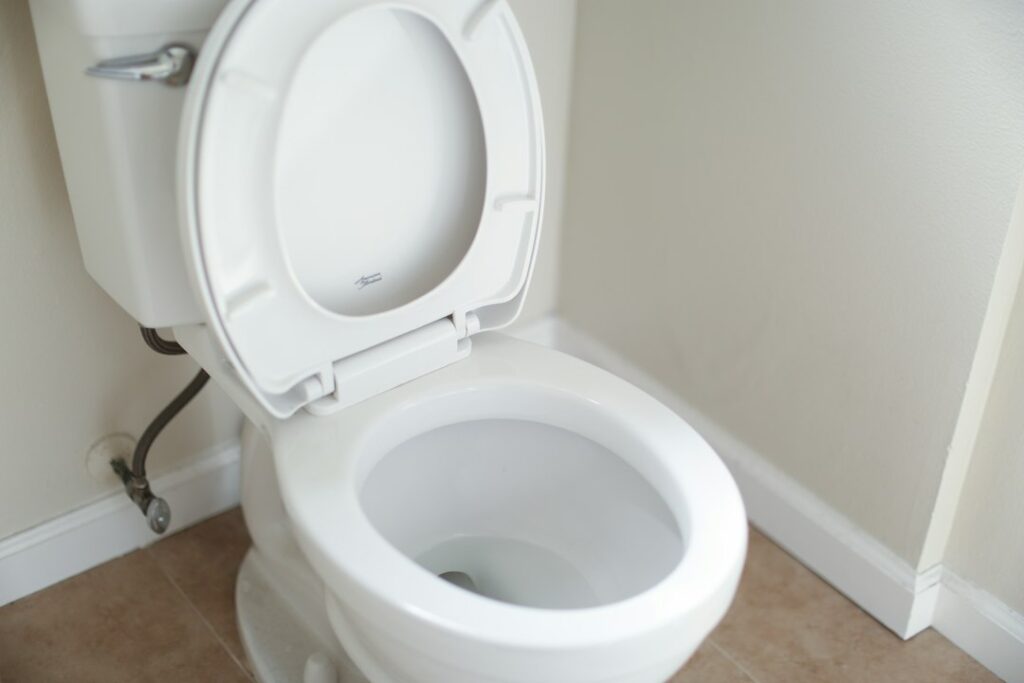
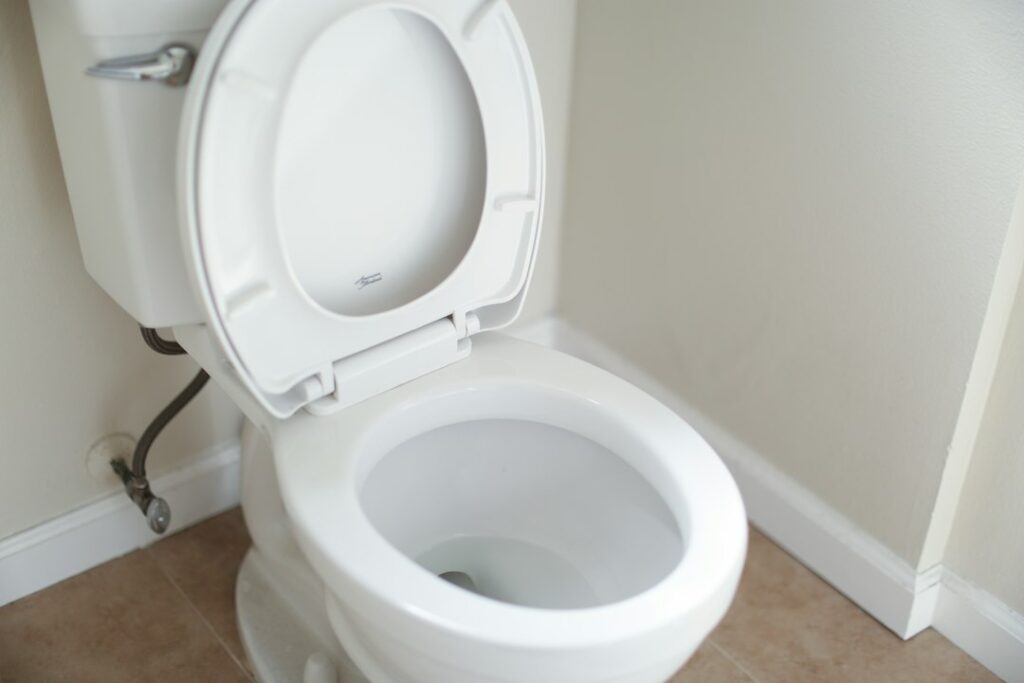
Water pooling around the bottom of a toilet is a warning sign, but it does not automatically mean the wax ring has failed. Water can run down from a supply connection, tank bolt, tank-to-bowl gasket, or a sweating tank and collect at the same spot. The safest first step is to find where the water starts—not to cover the joint with caulk or keep flushing.
Featured photo: Giorgio Trovato via Unsplash.
Is the toilet leaking from the base or from somewhere above it?
Dry the toilet and the surrounding floor completely. Use a flashlight and a few strips of dry paper towel to check the supply hose, shutoff valve, underside of the tank, tank-to-bowl joint, mounting-bolt areas, and the floor around the bowl. Wait briefly, then watch for the first place that becomes wet.
- Water at the supply hose or shutoff valve: The connector, valve, or hose may be leaking. Avoid forcing an old valve or overtightening a plastic fitting.
- Water beneath the tank or at the tank-to-bowl joint: The tank bolts, washers, or gasket may be the source. This is different from the floor seal.
- Moisture across the outside of a cold tank: Condensation can form in humid conditions and run down to the floor. Improve bathroom ventilation and check whether the moisture returns even when the toilet is not flushed.
- Water appears from under the bowl during or just after a flush: A failed bowl-to-flange seal, damaged flange, or movement at the toilet base is possible.
If water is actively escaping from beneath the bowl, stop using that toilet until it has been inspected. Close the toilet’s local shutoff valve if it turns easily and does not leak; if the valve is stuck or the leak continues, use the home’s main shutoff if safe. See our guide to shutting off your home’s water supply in an emergency.
Common reasons a toilet leaks at the base
1. A worn, displaced, or poorly seated wax ring
The wax ring (or another approved toilet seal) sits between the toilet outlet and the floor flange. It seals the drain connection so flush water and sewer gases stay in the drain system. If the toilet moves, the seal is not evenly compressed, or the seal was installed incorrectly, water may escape at the floor during a flush. A wax ring is not reusable after the toilet has been lifted or repositioned; install a new seal whenever the toilet is removed.
2. A loose or unstable toilet
A toilet should sit firmly on the finished floor. If it rocks, the movement can disturb the seal. Loose mounting hardware, an uneven floor, missing shims, or a damaged flange can all contribute. Do not try to stop movement by cranking the nuts down hard: porcelain can crack if the mounting hardware is overtightened.
3. A cracked or poorly supported closet flange
The closet flange is the fitting at floor level that connects the toilet to the drain and holds the mounting bolts. A cracked, corroded, loose, or incorrectly positioned flange may not support the toilet or seal correctly. A new wax ring alone will not repair a broken flange.
4. A leak from the tank or water-supply connection
Water from the tank bolts, tank gasket, fill-valve connection, supply hose, or shutoff valve can travel down the outside of the bowl and look like a base leak. Trace the highest wet point before deciding which part needs repair.
What to do right away
- Stop repeated flushing. If water is emerging from under the bowl, additional flushes can send more water beneath the toilet.
- Shut off the local supply if safe. The shutoff valve is usually on the wall or floor behind the toilet. Turn it gently; do not force a corroded or stuck valve.
- Keep people and pets away from contaminated water. Wear disposable gloves when handling water that may have come from the toilet drain. Clean and disinfect affected hard surfaces according to the product label, and never mix cleaning chemicals.
- Dry and document the area. Take photos of the leak and check whether flooring feels soft, swollen, or spongy. If there is a ceiling stain below the bathroom, arrange prompt inspection.
- Arrange a repair before returning the toilet to normal use. A leak that appears beneath the bowl during a flush needs the seal and flange checked, not simply hidden.
Can you replace a toilet wax ring yourself?
Some experienced homeowners can replace a wax ring, but the job requires lifting and resetting a heavy, awkward fixture. The toilet must also be reseated correctly. If you are unsure, have a plumber do the work—especially if the flange, bolts, or floor may be damaged.
Tools and supplies
- New wax ring or toilet seal compatible with the toilet and flange
- Replacement closet bolts if the existing bolts are corroded or damaged
- Adjustable wrench and putty knife
- Sponge, bucket, towels, and disposable gloves
- Cardboard or a protective surface for setting down the toilet
- A helper to lift and position the bowl safely
Basic replacement sequence
- Turn off and empty the toilet. Close the shutoff valve, flush, then use a sponge and bucket to remove remaining water from the tank and bowl.
- Disconnect the supply line. Keep a towel or small container ready for residual water. Remove the decorative bolt caps and loosen the mounting nuts.
- Lift the bowl carefully. Break the old seal with a gentle side-to-side movement, then lift the toilet straight up with help. Set it on cardboard or towels. Do not drag it across the floor.
- Protect and inspect the drain opening. While the toilet is off, loosely cover the open flange with a rag to limit sewer odors and keep debris out. Remove the rag before reinstalling the toilet. Scrape old wax from the flange and toilet outlet. Wear gloves and avoid dropping debris into the drain.
- Check the flange and floor. Stop and call a plumber if the flange is cracked, loose, badly corroded, too low, or if the subfloor is soft or damaged. Correct flange support and height matter; adding another wax ring is not a reliable repair for a damaged flange.
- Install a new seal as directed. Use a new wax ring or a compatible seal and follow its package instructions. Position the closet bolts correctly and align the bowl before lowering it.
- Set the toilet without rocking it. Lower the bowl straight onto the bolts and press down evenly to seat the seal. Once placed, do not lift or rock the toilet; disturbing the seal can cause another leak.
- Secure it carefully. Tighten the mounting nuts evenly and only as much as the toilet manufacturer’s instructions require. Use suitable shims if the floor is uneven; do not overtighten the nuts to force the bowl level.
- Reconnect and test. Reconnect the supply line, open the shutoff valve slowly, and check the hose and valve for drips. Flush several times while watching the tank connections and the base. If any water appears beneath the bowl, stop using it and have the installation checked.
When to call a plumber
Arrange professional help if the toilet continues to leak after a seal replacement, the bowl rocks despite careful shimming, the flange or mounting area is damaged, the floor feels soft, a ceiling below is stained, or the porcelain is cracked. A plumber can check the flange height and condition, identify hidden floor damage, and confirm whether the leak is from the toilet seal or another connection.
If the leak is coming from the tank or fill valve rather than the floor, our guide to common toilet problems and running-toilet components may help you identify the separate issue. For a broader inspection routine, see how to find hidden water leaks in your home.
Frequently asked questions
Can I keep using a toilet that leaks around the base?
No. If water is coming from beneath the bowl during a flush, stop using it until the seal and flange are checked. Continued leakage can damage flooring and the subfloor, and the water may be unsanitary.
Will tightening the toilet bolts stop a base leak?
Only if the problem is minor looseness and the seal is still intact. If the wax ring has shifted or been damaged, tightening the bolts will not restore it. Tighten cautiously because excessive force can crack the toilet.
Does caulk fix a leaking toilet base?
No. Caulk is not a substitute for a sound toilet seal or flange. Find and repair the source of the water first; do not cover an active leak.
Should I reuse the old wax ring if I lift the toilet?
No. Use a new seal whenever the toilet is removed or the existing wax ring has been disturbed. Follow the seal manufacturer’s installation instructions.
Conclusion
A toilet leaking at the base should be investigated promptly. First trace the water to rule out the tank, supply line, and condensation. If moisture appears from beneath the bowl during a flush, stop using the toilet and have the wax seal and closet flange inspected. A careful repair—and attention to any damaged flooring—helps prevent a small leak from becoming a larger bathroom problem.
Sources and further reading
- Oatey: How to Fix a Leaking Toilet — wax-ring and flange failure, installation considerations, and when professional help is appropriate.
- Kohler installation instructions — seating the wax ring, avoiding movement after placement, and avoiding overtightening.
- American Standard: Installing a Cadet Two-Piece Toilet — setting the bowl, securing mounting hardware, reconnecting the supply, and checking for leaks.