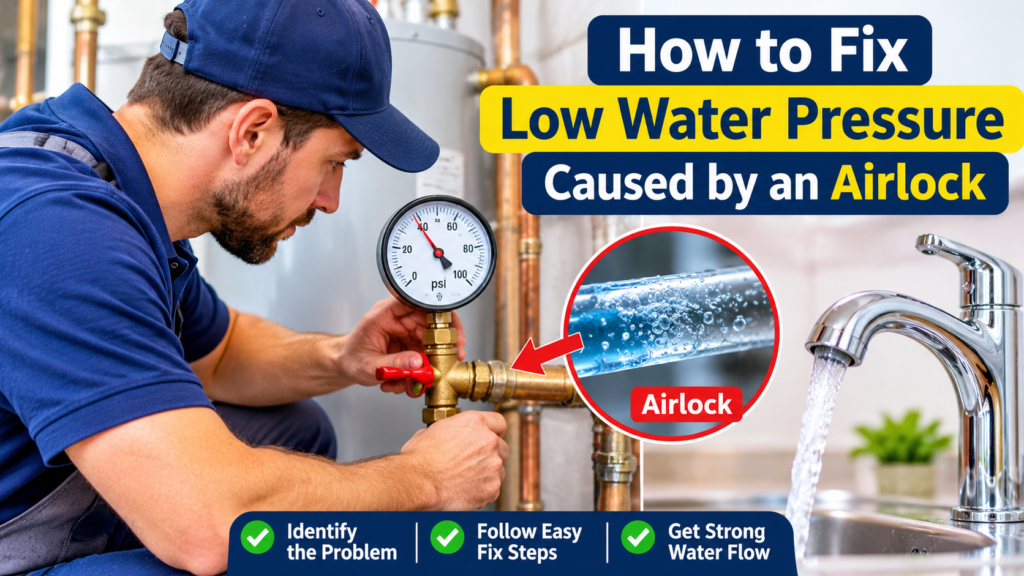
Low water pressure can make everyday tasks frustrating. A shower may trickle, a kitchen tap may barely run, or several fixtures may sputter after plumbing work or a temporary water-supply interruption. One possible cause is air trapped inside a water line. However, low pressure can also come from a partly closed valve, clogged fixture, leak, pressure regulator, pump, or supply issue.
This guide explains how to check whether an airlock may be responsible, what low-risk steps a homeowner can try, and when a licensed plumber should inspect the system. The safest approach is to identify where the pressure loss occurs before attempting to clear anything.
Can an airlock cause low water pressure?
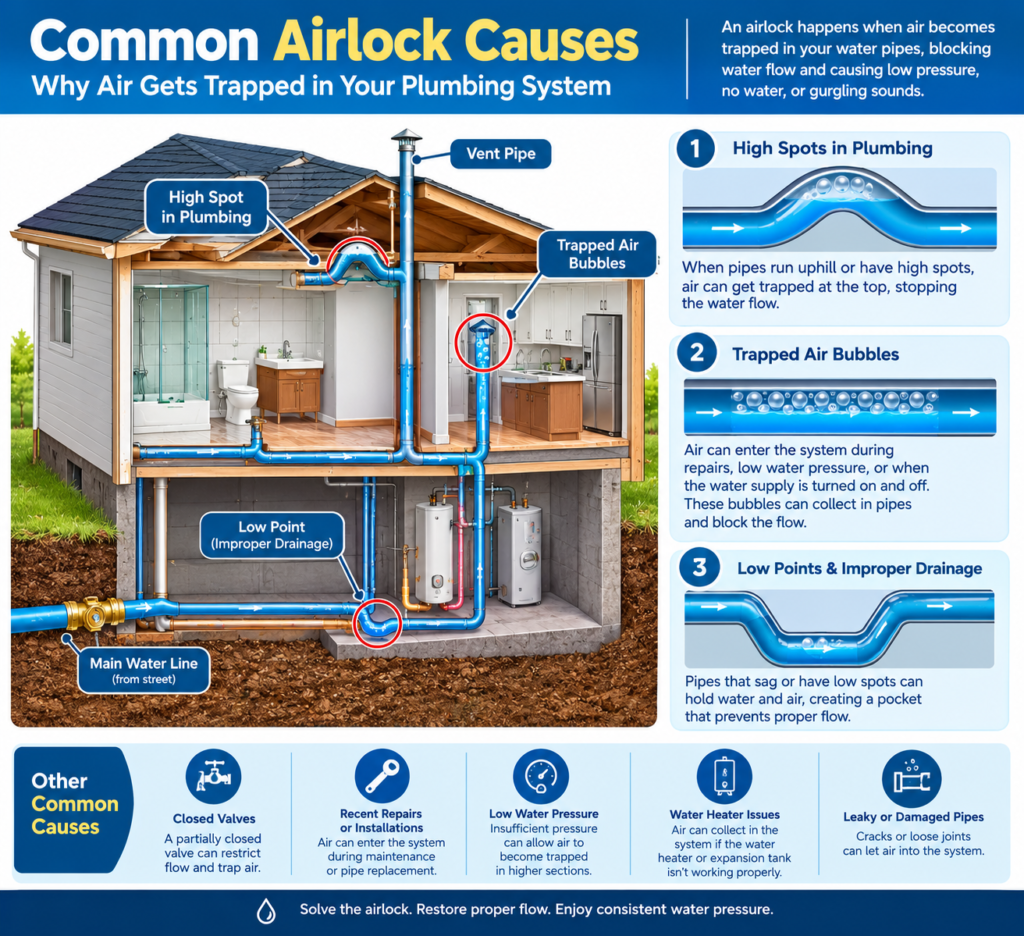
Yes. An air pocket trapped in a water pipe can interrupt or restrict the normal flow of water. It may appear after a supply interruption, draining a plumbing system, maintenance, or pipe repairs that allow air into the line. Air can collect at high points or in sections of pipe where it does not easily travel out with the water.
Possible signs include sputtering taps, intermittent flow, gurgling sounds, or weak water delivery at more than one fixture. These symptoms do not confirm an airlock on their own. A clogged aerator, blocked filter, closed shutoff valve, leaking pipe, faulty pressure regulator, or pump problem can produce similar symptoms.
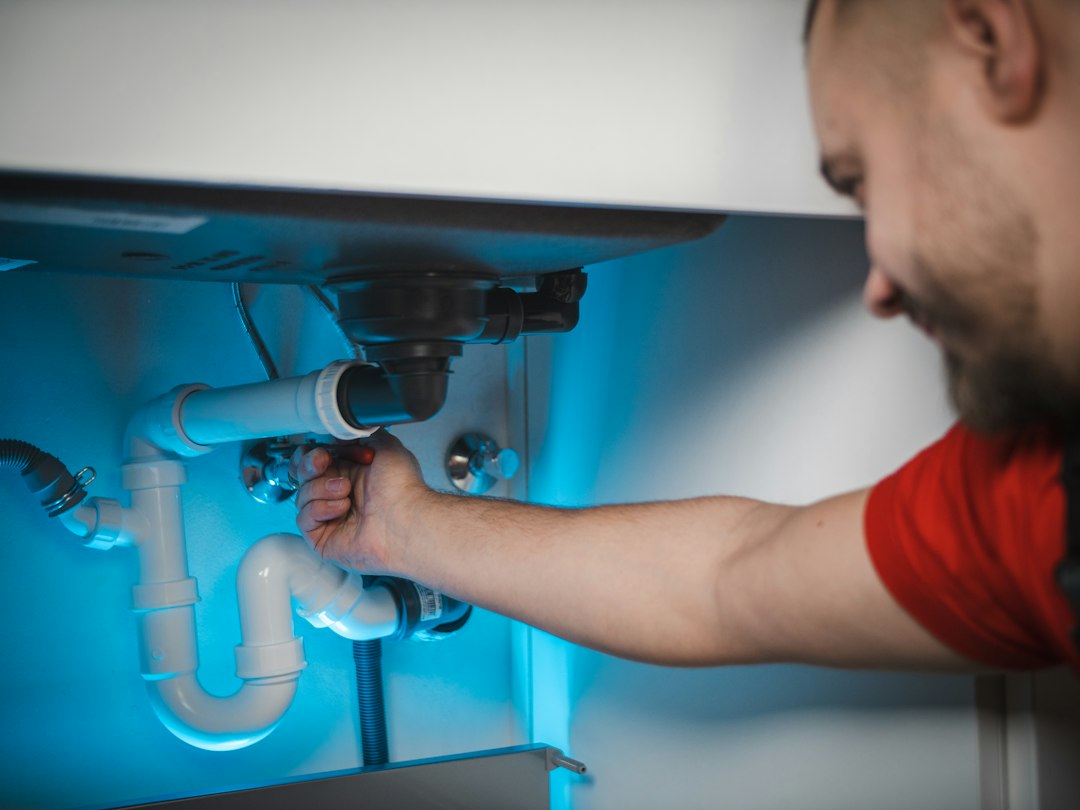
Step 1: Find out which fixtures are affected
Test several taps around the property, including a cold-water tap and a hot-water fixture. If only one faucet has weak flow, the problem may be local to that fixture. If multiple taps in one area are affected, the issue may be in a branch line. If the whole property has low pressure, check the main supply and system components.
Ask whether the water supply was recently shut off, whether plumbing work has taken place, or whether nearby properties are also experiencing low pressure. If neighbors have the same issue, contact the water supplier before attempting plumbing repairs.
Step 2: Check accessible shutoff valves
Look at the accessible shutoff valves beneath affected sinks and near appliances. A valve that is only partly open can restrict flow. If a valve is clearly intended for normal operation and moves freely, make sure it is fully open. Do not force a stiff, damaged, or corroded valve, and do not adjust equipment valves whose purpose you are unsure of.
Step 3: Inspect the faucet aerator
When just one faucet is affected, mineral deposits or debris in its aerator may be reducing the flow. Turn the faucet off and, if the aerator is designed to be removed by the homeowner, take it off carefully. Rinse away visible debris, clean it according to the fixture manufacturer’s instructions, and reinstall it securely. Test the tap again.
Step 4: Try a brief, gentle cold-water flush
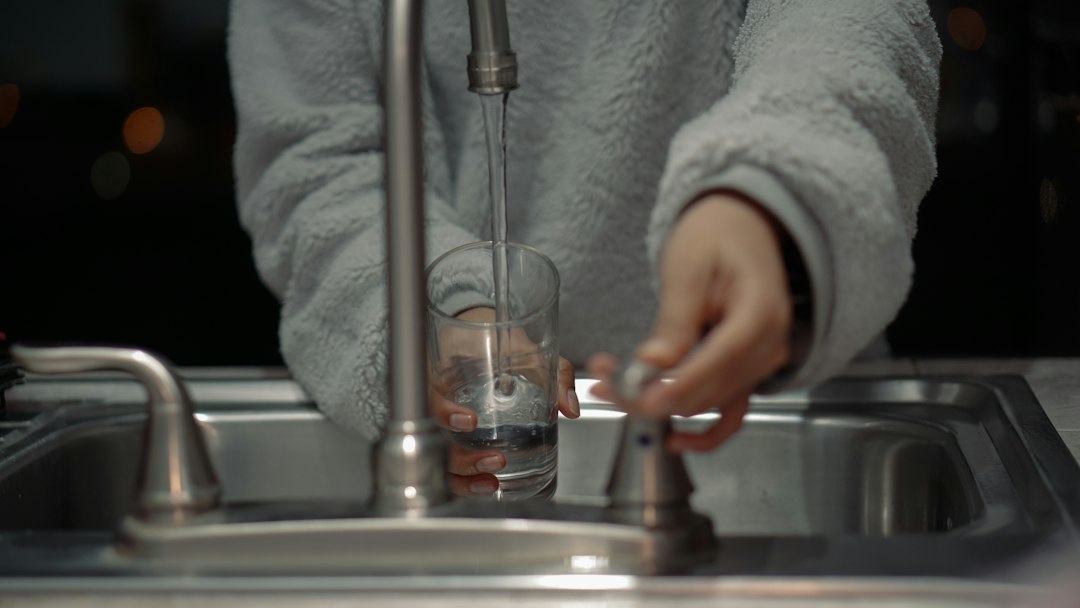
If the symptoms began after a supply interruption or plumbing work, a brief flush may help move a small amount of air through a straightforward household supply line. Open the affected cold-water tap slowly and let it run under supervision. If several fixtures are affected, you can try nearby cold-water taps one at a time, then check whether the flow becomes steady.
Do not leave taps running unattended or continue flushing for a long time if the flow does not improve. Turn the tap off if the water continues to sputter, pressure drops further, or unusual noises occur. Repeated flushing will not fix a leak, blockage, faulty valve, or pump problem.
Step 5: Treat hot-water and pump systems differently
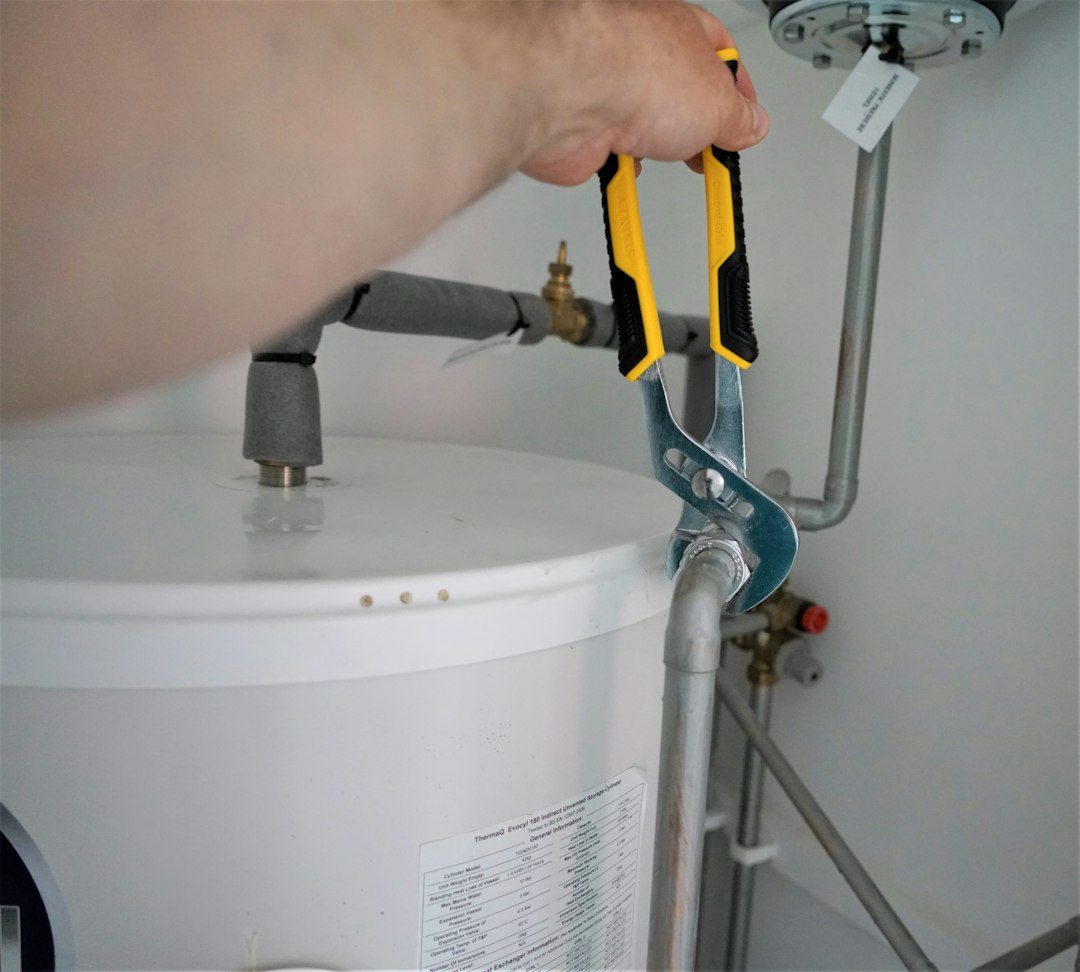
If low pressure affects only hot water, the cause may involve the water heater, a mixing valve, a hot-water filter, or the hot-water pipework. Do not open drain valves, relief valves, service panels, or hot-water connections to vent air. Hot water can scald, and many systems require a specific professional purging procedure. Follow the manufacturer’s instructions and contact a qualified plumber if normal fixture checks do not restore flow.
Homes with private wells or booster pumps need additional care. Loss of pump prime, a clogged filter, a suction-side leak, a pressure-switch fault, or a closed valve can resemble an airlock. Never run a pump that may be dry, and do not remove electrical covers or adjust pressure switches yourself. Use the pump manufacturer’s troubleshooting guidance or arrange professional service.
Step 6: Check for leaks and recurring pressure loss
Look for damp patches, dripping joints, unexplained pooling, or changes in the water meter when all fixtures are off, if you can safely access it. A leak can reduce pressure and may allow air to enter some systems. If you suspect a leak, shut off the appropriate supply only if you can identify and operate the valve safely, then arrange an inspection.
If pressure returns briefly but drops again, or air keeps appearing in the pipes, the system needs a proper diagnosis. A plumber can check supply pressure, filters, regulators, valves, pipe routing, pumps, and possible leaks instead of treating the symptom alone.
What you should never do
Do not loosen pipe unions, remove plugs, drill into pipes, or open unknown valves to release trapped air. Never bypass a backflow preventer, pressure regulator, water-heater safety device, or pump protection. Avoid improvised hose connections between hot and cold taps: an unsuitable connection can cause cross-contamination, leaks, or equipment damage.
When to call a professional plumber
Arrange professional help if several fixtures have a sudden or severe pressure loss, there is no water, you find a leak, the problem keeps returning, or the issue involves a water heater, well pump, or booster system. Call promptly if pipes bang or vibrate severely, or if water is near electrical equipment. Keep clear of electrical hazards and contact the appropriate emergency professional.
Frequently asked questions
How do I know if low water pressure is caused by an airlock?
Sputtering or intermittent flow after plumbing work or a water interruption can suggest air in the line. But these signs are not conclusive. Check whether one fixture or several are affected and rule out simple causes such as a clogged aerator or partly closed valve.
Will running the tap fix an airlock?
A brief, supervised flush may clear a small amount of air in some household supply lines. There is no universal flushing time or method for every plumbing system. Stop if the symptoms persist or worsen.
Why is water pressure low in only one faucet?
A clogged aerator, blocked cartridge, or partly closed fixture shutoff valve is often more likely than a whole-system airlock when only one tap is affected. Clean or inspect only parts designed for routine homeowner maintenance.
Can an airlock affect hot water only?
Air or another restriction may affect the hot-water side, but a water heater, mixing valve, filter, or hot-water pipe issue can cause similar symptoms. Because hot-water equipment can be hazardous, have a qualified plumber inspect persistent problems.
Restore water pressure safely
Start by checking how widespread the pressure loss is, inspecting accessible valves and faucet aerators, and trying only a short, gentle cold-water flush when appropriate. If pressure does not return, the problem repeats, or a pump or hot-water system is involved, get professional help. Finding the actual cause is the best way to protect your plumbing and restore reliable water flow.
Safety note: This article is general homeowner guidance, not a substitute for a site-specific plumbing assessment. Plumbing layouts and local requirements vary. Follow equipment instructions and use a licensed professional for work beyond basic fixture checks.