A garbage disposal that hums but does not grind is often trying to run while its grinding plate is stuck. A jam can strain the motor, so switch the unit off as soon as you hear the hum. Do not keep flipping the switch or put your hand into the drain. The steps below explain how to check a common jam safely, what to do if the disposal is completely silent, and when to stop and call a professional.
What the sound can tell you
- Humming without grinding: The motor may be receiving power but unable to turn because something is lodged in the grinding chamber. Switch it off promptly.
- No sound at all: The unit may have tripped its overload protector, lost power, or developed an electrical or motor fault.
- Metallic rattling or clanking: A hard object may be inside the chamber, or a mounting part may be loose. Turn the unit off before investigating.
- Water leaking below the sink: Stop using the disposal and keep it switched off. A leak from the unit, mounting assembly, or drain connection needs to be identified before the disposal is used again.
Before troubleshooting: disconnect the power
Turn the disposal switch off. If the unit has a plug, unplug it from the outlet under the sink. If it is hardwired, switch off the correct circuit breaker and keep the wall switch off. Do not rely on the wall switch alone while inspecting the drain opening. If the area is wet, wiring is exposed, or you cannot confidently identify the correct breaker, do not touch electrical components—call an electrician or plumber.
Never put your hand or fingers inside a garbage disposal, even when it appears to be off. Use a flashlight to look into the chamber and long-handled tongs or pliers for a visible object. Follow the instructions for your exact model.
How to clear a jammed garbage disposal
- Turn off and disconnect power. Unplug the unit or turn off its circuit breaker as described above. Keep the disposal switch off throughout the inspection.
- Remove standing water if needed. If the sink is full, bail water into a bucket so you can see the drain opening. Do not run the disposal to drain it.
- Look for a visible obstruction. Shine a flashlight into the chamber. If you can see a utensil fragment, bone, or other object, remove it with long tongs or pliers. Never reach in by hand and do not force an object deeper.
- Use the correct jam wrench only if your model supports it. Some disposals have a hex-shaped socket in the center of the bottom of the unit. If your owner’s manual identifies one, insert the supplied wrench or the specified-size Allen wrench and gently work it back and forth as directed. Stop if it binds or requires excessive force. Not every disposal uses the same release method.
- Allow the motor to cool and check the reset instructions. Some models have a manual overload-reset button on the bottom; others use a different reset process. Only press a reset button after the obstruction has been cleared and after the cooling time specified in your manual. If the button will not stay in, do not keep pressing it.
- Restore power and test cautiously. Remove all tools from the sink, make sure nobody is near the opening, and follow the manufacturer’s restart procedure. Run cold water and briefly switch the disposal on. If it hums again, switch it off immediately and disconnect power again.
If the disposal is silent and will not start
A silent disposal needs a different check from one that hums. With the unit switched off, check whether its plug has come loose and whether a nearby GFCI outlet has tripped. If you can safely access your electrical panel and the area is dry, look for a tripped breaker. Reset a breaker only once; if it trips again, leave it off and contact a qualified electrician. Do not open the disposal’s electrical housing or handle wet wiring.
If your model has an overload protector, consult its manual for the correct reset location and cooling period. A reset button that will not stay in, repeated trips, or a unit that remains silent after the basic power checks may indicate a fault that needs professional diagnosis.
When to call a plumber or electrician
- The disposal remains jammed after the model-approved release procedure.
- The motor hums again immediately, overheats, or repeatedly trips its overload protector.
- You smell burning, see smoke, notice sparks, or hear a severe grinding noise. Keep power off and arrange professional service.
- The disposal or nearby drain connections leak, the housing is cracked or badly corroded, or the unit is loose at the sink mounting.
- You cannot safely access the plug or breaker, or you suspect an electrical fault.
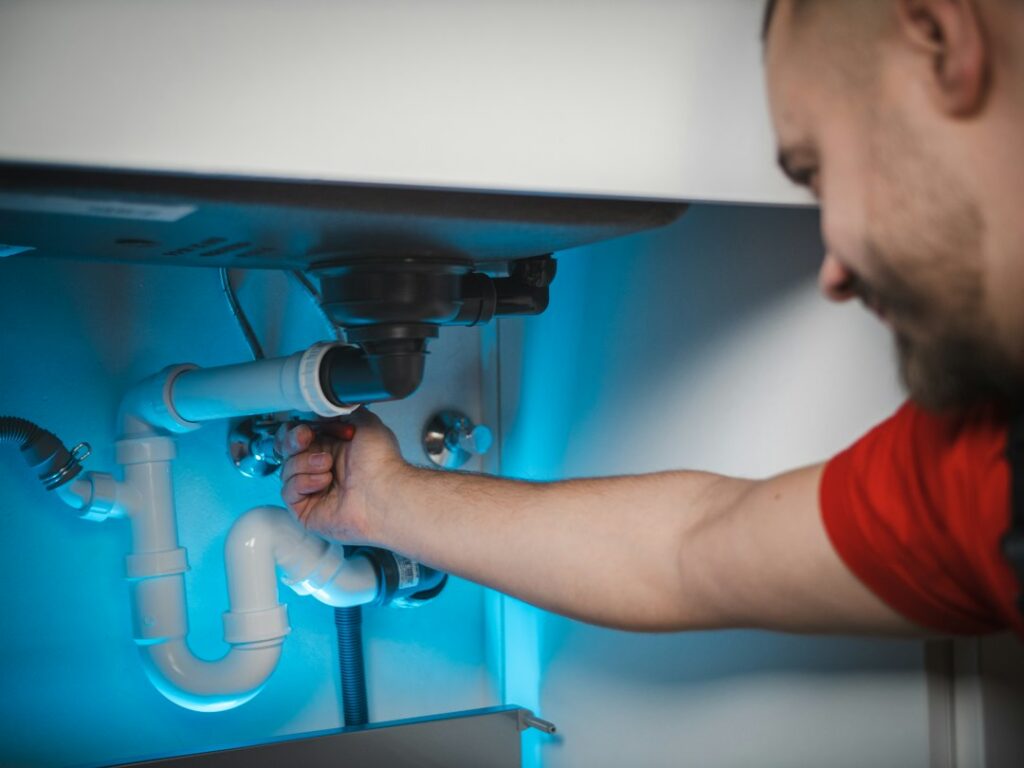
If water is coming from the adjacent P-trap rather than the disposal itself, see our guide on how to identify and fix a leaking P-trap under your sink. A drain-connection leak is a separate issue and should be repaired before normal use resumes.
Habits that help prevent future jams
- Run a steady flow of cold water while grinding and keep it running for several seconds after the disposal is switched off, following your model’s instructions.
- Feed small amounts gradually rather than packing the chamber full.
- Keep grease, oil, and fat out of the disposal and drain.
- Check your owner’s manual for foods and materials your particular unit cannot handle. Fibrous scraps, hard items, and non-food objects can cause problems in many models.
- Do not use the disposal as a substitute for a trash can, and never place utensils or cleaning tools into the chamber while it is powered.
Frequently asked questions
Can I put my hand into the disposal after switching it off?
No. Never put your hand or fingers into a garbage disposal. Disconnect power before inspecting it, and use a flashlight and long-handled tongs or pliers for a visible object.
Should I press the reset button when the disposal hums?
Not before checking for a jam. Switch off and disconnect power, clear an obstruction using the method approved for your model, and then follow the manual’s cooling and reset instructions.
Why does the disposal hum for a few seconds and then stop?
A jam can prevent the grinding mechanism from turning and may cause the overload protector to shut the unit down. Stop trying to run it and check the model-specific jam procedure. Repeated humming or shutdowns call for professional help.
Manufacturer guidance
Garbage disposal designs and reset procedures differ. Before using a wrench or reset button, check the owner’s manual for your exact model. These manufacturer resources explain common jam and noise troubleshooting:
- InSinkErator: Fixing a Jammed Garbage Disposal
- InSinkErator: Garbage Disposal Making an Unusual Noise
- InSinkErator: Resetting a Garbage Disposal
Image credits: Featured image by Henry Kobutra; in-content sink images by Yimeng Zhao and Giorgio Trovato, via Unsplash.
Final takeaway
A humming garbage disposal should be switched off promptly, not repeatedly restarted. Once power is disconnected, a homeowner may be able to remove a visible obstruction or use the release method specified for that model. If the unit remains stuck, trips again, leaks, or shows signs of electrical or motor damage, leave it off and get professional help.